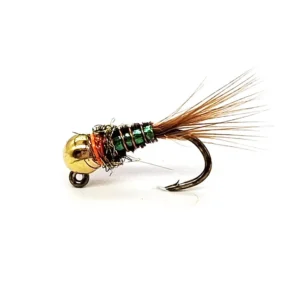
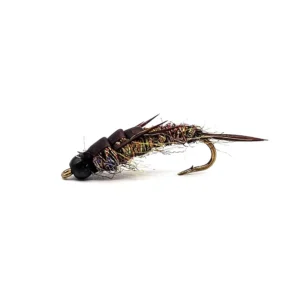
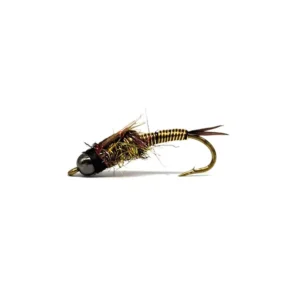
Nymph fishing is a highly effective subsurface fly fishing technique that targets fish where they feed most often: underwater. It imitates the immature, larval stage of aquatic insects like mayflies, caddisflies, and stoneflies, known as nymphs or larvae, which constitute a vast portion of a trout’s diet.
Unlike dry flies that float, nymphs are designed to sink. They are typically tied with heavier materials, such as lead-free wire or beads, to help them quickly reach the bottom of a river or lake where these insects live. The angler’s goal is to present the fly so it drifts naturally along the current, mimicking a nymph dislodged from the riverbed or swimming to the surface to hatch.
Since the take happens underwater and is often subtle, detecting strikes is the primary skill. Anglers rely on visual indicators, such as a small, brightly colored piece of foam called a “strike indicator,” or watch the end of their fly line for any unnatural hesitation.
Because fish expend less energy feeding below the surface, nymph fishing consistently catches more fish than dry fly fishing. It is a foundational method that rewards a deep understanding of aquatic entomology and presentation, making it an essential skill for any serious fly angler.